CBE

KJSEA Grading System Explained: How Grade 9 Points Work

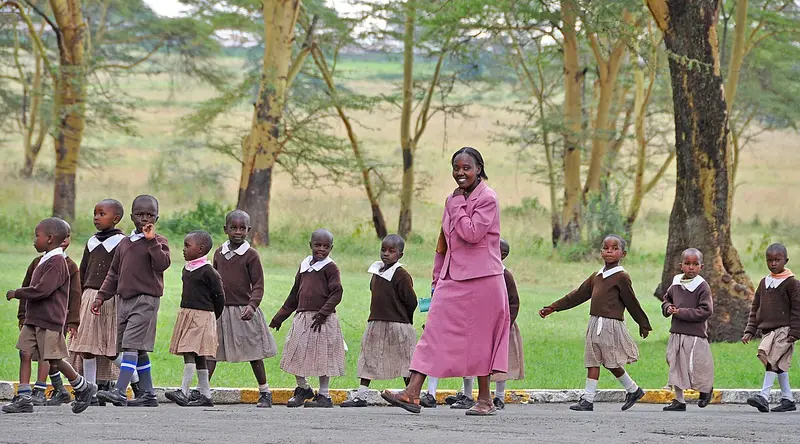
A smiling teacher walking with a line of pupils in maroon school uniforms

You open your child's KJSEA result slip and see letters like EE2, ME1 and AE1 where you expected marks or an A or B. Sound familiar? You're not the only parent squinting at the KJSEA grading system for the first time.

Relax. By the end of this read, you'll understand the KJSEA grading system well enough to read any result slip in two minutes, explain it to your child, and know what it means for Grade 10.

Here's the short answer. The KJSEA grading system scores each learning area on an 8-point scale, from EE1 (8 points, the best) down to BE2 (1 point). Each subject stands on its own. There's no single mean grade like KCSE had.

How does the KJSEA grading system work?

KJSEA (the Kenya Junior School Education Assessment) is the Grade 9 assessment run by KNEC. Instead of letter grades, it uses four plain-language descriptors, and KNEC splits each into two levels. In KNEC's words, achievements "are put into an eight-point scale by subdividing each descriptor into two levels" (Nairobi Leo).

Level Full name Points In plain words
EE1 Exceeding Expectation 1 8 Outstanding in this subject
EE2 Exceeding Expectation 2 7 Very strong
ME1 Meeting Expectation 1 6 Good, solidly on track
ME2 Meeting Expectation 2 5 On track, with room to grow
AE1 Approaching Expectation 1 4 Getting there, needs support
AE2 Approaching Expectation 2 3 Needs regular support
BE1 Below Expectation 1 2 Struggling, needs close help
BE2 Below Expectation 2 1 Needs the most help

So if your child got ME1 in Mathematics, that's 6 out of 8 KJSEA grading points: good and on track.

KJSEA vs KCSE: what's different?

If you sat KCSE yourself, this is the part that feels strange. Here's the difference side by side:

KCSE (8-4-4) KJSEA (CBE)
Scale 12 grades, A to E 8 levels, EE1 to BE2
Points per subject 12 down to 1 8 down to 1
Overall result One mean grade No official overall grade
What it's for University and college placement Senior School placement and pathway

If you'd like to see how the old system worked, our guide to how the KCSE grading system works explains it. Older siblings in Form 3 are the very last KCSE class, as our post on the last KCSE exam in 2027 explains.

Which learning areas does KJSEA cover?

Nine learning areas, as reported from KNEC: English, Kiswahili (or Kenyan Sign Language for learners who are deaf), Mathematics, Integrated Science, Social Studies, Religious Education (CRE, IRE or HRE), Agriculture, Pre-Technical Studies, and Creative Arts and Sports (Education News).

KNEC has said the results draw on your child's whole Junior School journey, not just one week of papers. They include KPSEA reports, school-based assessment, three Grade 9 projects and the final written assessment (Citizen Digital).

What about percentages?

You'll see percentage ranges shared online, such as EE1 = 90 to 100 percent and EE2 = 75 to 89 percent (Radio47). Here's the honest part: we couldn't find these ranges in an official KNEC document. Use them as a rough guide only, and don't stress over a single percentage point.

Is KJSEA marked out of 72 points?

Not officially. Here's where the 72 comes from: nine learning areas × 8 points each = 72. Many people add up their child's points to get a total out of 72, and it can be a handy way to see the big picture.

But KNEC reports each learning area separately. It has said there is "no school mean score", and that this approach "ensures that a child's excellence in one subject is not overshadowed by weaker performance in another" (Nairobi Leo).

That's actually good news. A child who shines in Creative Arts and Sports isn't dragged down by Mathematics, and the other way round.

How to calculate KJSEA points: a worked example

Let's take Baraka, an example Grade 9 learner (not a real child). Here's his slip. To calculate his KJSEA points, you simply add the points for each learning area:

Learning area Level Points
English ME1 6
Kiswahili ME2 5
Mathematics AE1 4
Integrated Science ME2 5
Social Studies EE2 7
Religious Education EE2 7
Agriculture ME1 6
Pre-Technical Studies ME2 5
Creative Arts and Sports EE1 8
Informal total 53 out of 72

What does this tell Baraka's parents?

  1. His strengths are clear. Creative Arts and Sports, Social Studies and Religious Education are all Exceeding Expectation.
  2. Mathematics needs attention. AE1 means he's approaching the expected level, but needs support.
  3. He's on track almost everywhere else. ME1 and ME2 mean he's meeting expectations.

Notice how much more useful that is than one number. It points straight at where to help.

How do KJSEA results affect Grade 10 placement?

For the 2025 placement, reports said the score used for Senior School placement weighted KJSEA at 60 percent, school-based assessment from Grades 7 and 8 at 20 percent, and KPSEA at 20 percent (Education News). The Ministry also said placement considered learners' school choices, their pathway, equity and how many places each school had (Kenyans.co.ke).

So KJSEA matters a lot, but it isn't the whole story. Your child's work across Junior School counts too.

One more thing: KNEC's chief executive has said repeating KJSEA will not improve a learner's final score (Education News). The best move is to look forward, to Grade 10.

What to do after you've read the slip

Whatever your child's levels say, here's a calm next step you can take for each:

  • Mostly EE: Celebrate. Then help your child keep the habit going. Senior School moves faster.
  • Mostly ME: Your child is on track. Pick the one or two ME2 subjects closest to their chosen pathway and build those up first.
  • Some AE or BE: Don't panic. These are "needs support" signals, not failures. Find out which topics caused trouble, and give them short, regular practice over the holiday.

In all three cases, the most useful thing you can do is talk with your child about what they enjoyed and what felt hard. You'll learn more from that chat than from any total. It also helps you both when it's time to think about a pathway.

You've got this

The KJSEA grading system looks strange at first, but it's simple once you see it: eight levels, points from 8 to 1, one result per learning area. Read the slip subject by subject, notice the strengths, pick one area to support, and help your child step into Grade 10 with confidence.

Cover photo: Image by Nick115 from Pixabay

Frequently Asked Questions

What is the highest grade in KJSEA?
EE1 (Exceeding Expectation 1), worth 8 points in a learning area. The lowest is BE2 (Below Expectation 2), worth 1 point.
Is KJSEA marked out of 72?
72 is simply the most points a learner can get if you add up nine learning areas at 8 points each. KNEC reports each learning area separately and has said there is no school mean score, so the 72-point total is an informal way of reading the slip, not an official grade.
What percentage is EE1 in KJSEA?
Media reports put EE1 at 90 to 100 percent and EE2 at 75 to 89 percent, but KNEC has not published these ranges in an official document we could find. Treat them as a rough guide.
How is Grade 10 placement worked out?
Reports on the 2025 placement say KJSEA counted for 60 percent, school-based assessment in Grades 7 and 8 for 20 percent, and KPSEA for 20 percent. The Ministry also considered the learner's school choices, pathway and school capacity.
Can my child repeat KJSEA to improve their points?
KNEC's chief executive has said repeating KJSEA will not improve a learner's final score, so it isn't a route to better placement.