CBE

STEM Pathway in Senior School: Subjects, Tracks and Careers

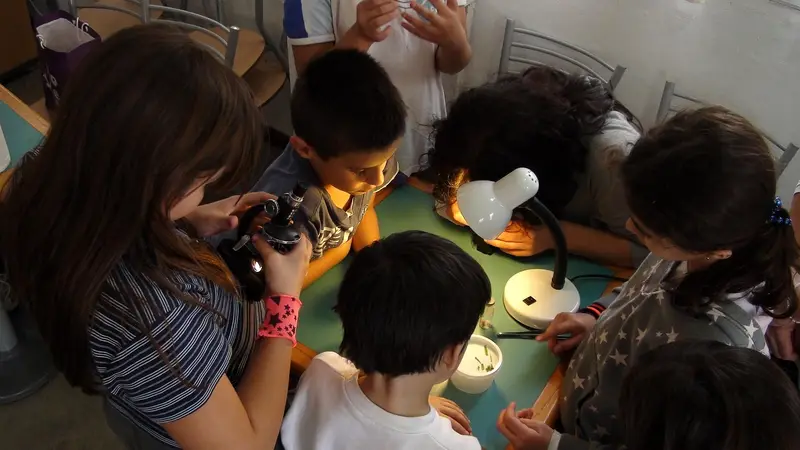
A group of students leaning over a table to look through a microscope

Your child says they want to be an engineer. Or a doctor. Or they just love taking things apart to see how they work. Everyone tells you: "STEM, obviously." But what are the STEM pathway subjects, really, and what will your child study every day?

Relax. By the end of this read, you'll know how the three tracks differ, which careers each one points to, and how your child can do well in it.

Here's the short answer. STEM (Science, Technology, Engineering and Mathematics) has three tracks: Pure Sciences, Applied Sciences and Technical Studies. Every STEM learner takes the four core subjects, with Core Mathematics, plus three electives, mostly from one track.

What are the STEM pathway subjects?

Here's the full picture, as reported from KICD's Senior School designs (Education News Hub, Education News):

Track Subjects Feels like...
Pure Sciences Mathematics, Biology, Chemistry, Physics, General Science Understanding how the world works
Applied Sciences Agriculture, Computer Studies, Home Science Using science to solve everyday problems
Technical Studies Building Construction, Woodwork, Metalwork, Power Mechanics, Electricity, and in a few schools Aviation, Media Technology, Marine and Fisheries Building, fixing and making things

All STEM learners also take the core subjects: English, Kiswahili (or Kenyan Sign Language), Mathematics and Community Service Learning. For STEM, Mathematics means Core Mathematics, which goes deeper into algebra, geometry, statistics and probability than the Essential Mathematics other pathways take (The Star).

For the bigger picture across all three pathways, see our guide to Grade 10 subject combinations.

How do you choose between the three tracks?

You don't have to guess. Ask your child three questions:

  1. "Do you like asking why?" Curious about how the body, chemicals or electricity work? That's Pure Sciences.
  2. "Do you like making something useful?" Excited by farming, coding or cooking with a purpose? That's Applied Sciences.
  3. "Do you like working with your hands?" Happiest building, wiring or repairing? That's Technical Studies.

Most learners lean clearly one way. If your child is torn, choose the track whose subjects they score better in on the KJSEA slip. Our guide to the KJSEA grading system helps you read it.

Pure Sciences track: for future doctors and researchers

This is the track most people picture when they hear "STEM". It suits learners who are curious about why things happen and are willing to practise calculations regularly.

Typical careers it can lead to include medicine, nursing, pharmacy, laboratory science, engineering, research and teaching science.

Applied Sciences track: science you can use

Applied Sciences takes science into real life: growing food, building software, running a healthy home or business. It suits practical learners who like seeing results.

Typical careers include agriculture and agribusiness, software and IT, nutrition, food science and hospitality.

Technical Studies track: for builders and makers

If your child is the one fixing the radio or building a toy car from scraps, look here. Technical Studies is hands-on, with workshops and projects.

Typical careers include construction, electrical work, mechanics, manufacturing and, for some, engineering. One honest note: not every school has the workshops these subjects need, and some subjects run in only a few schools.

STEM pathway careers: a quick guide

Universities and colleges set their own entry requirements, so treat this table as a starting point and confirm with your child's career guidance teacher:

If your child dreams of being a... Subjects worth taking
Doctor, nurse, pharmacist Biology, Chemistry, plus Physics
Civil or mechanical engineer Physics, Chemistry, and a technical subject
Software developer Computer Studies, Physics
Agricultural scientist or agripreneur Agriculture, Biology, Chemistry
Electrician or electrical engineer Electricity, Physics
Nutritionist or chef Home Science, Biology

Is STEM only for top performers?

No. When KICD designed the curriculum, it planned for about 60 percent of Senior School learners to be in STEM (KICD Curriculum Framework). It's built for the majority, not a small elite.

What STEM does need is steady practice. Maths and science skills build on each other, so a gap in Grade 10 makes Grade 11 harder. The good news: steady practice is something any learner can do.

Common worries about STEM, answered

"What if my child struggles with Maths?" Then the first job is to fix the gaps, not to avoid STEM forever. Core Mathematics builds on Junior School Maths, so a holiday spent on fractions, algebra and equations pays off quickly.

"Will my child have time for anything else?" Yes. Like every learner, your child takes seven subjects, the same number as in other pathways. STEM isn't more subjects, just different ones.

"Is the school equipped?" Ask. Labs and workshops matter in STEM, so it's a fair question when you visit.

How to do well with STEM pathway subjects

  1. Practise Maths a little every day. Twenty minutes daily beats three hours on Sunday.
  2. Understand, don't memorise. If your child can explain a formula in their own words, they'll be able to use it.
  3. Take practicals seriously. Labs and workshops are where science becomes real, and they count in assessment.
  4. Fix gaps early. If something from Grade 9 is shaky, sort it out in the first term.
  5. Use AI wisely. An AI tutor that gives hints, not answers, can help. Our guide on AI for homework help explains how.

You've got this

The STEM pathway isn't one road. It's three: Pure Sciences, Applied Sciences and Technical Studies, each leading to good careers. Match the track to what your child genuinely enjoys, build steady Maths habits from the first week of Grade 10, and STEM becomes a path they grow into, not a weight they carry.

Cover photo: Image by patricialacolla from Pixabay

Frequently Asked Questions

What subjects are in the STEM pathway?
STEM has three tracks. Pure Sciences (Mathematics, Biology, Chemistry, Physics, General Science), Applied Sciences (Agriculture, Computer Studies, Home Science) and Technical Studies (such as Building Construction, Woodwork, Metalwork, Power Mechanics and Electricity).
Do STEM learners take Core or Essential Mathematics?
Core Mathematics. Learners in Social Sciences and Arts and Sports Science take Essential Mathematics instead.
Which STEM subjects do I need to become a doctor?
Biology and Chemistry are the usual starting point for medicine and other health careers, with Core Mathematics and often Physics. Universities set their own entry rules, so confirm with the school's career guidance teacher.
Is STEM only for top performers?
No. KICD planned for about 60 percent of Senior School learners to be in STEM, so it's designed for many learners, not a small group. What matters most is genuine interest and steady effort in Maths and Science.